A Muslim habit tracker, without ads
Aqdam is a Muslim habit tracker for iPhone, iPad and Android. Prayer times and athan, the five prayers first, then small steps after the Sahaba: Qada Balance, Excused Days, a Quran reader, more than 170 du'as, and the source behind every practice. No account, no ads, no analytics.

Aqdam أقدام
Small steps, kept, each with its source.



- Free to download
- iPhone, iPad & Android
- No account
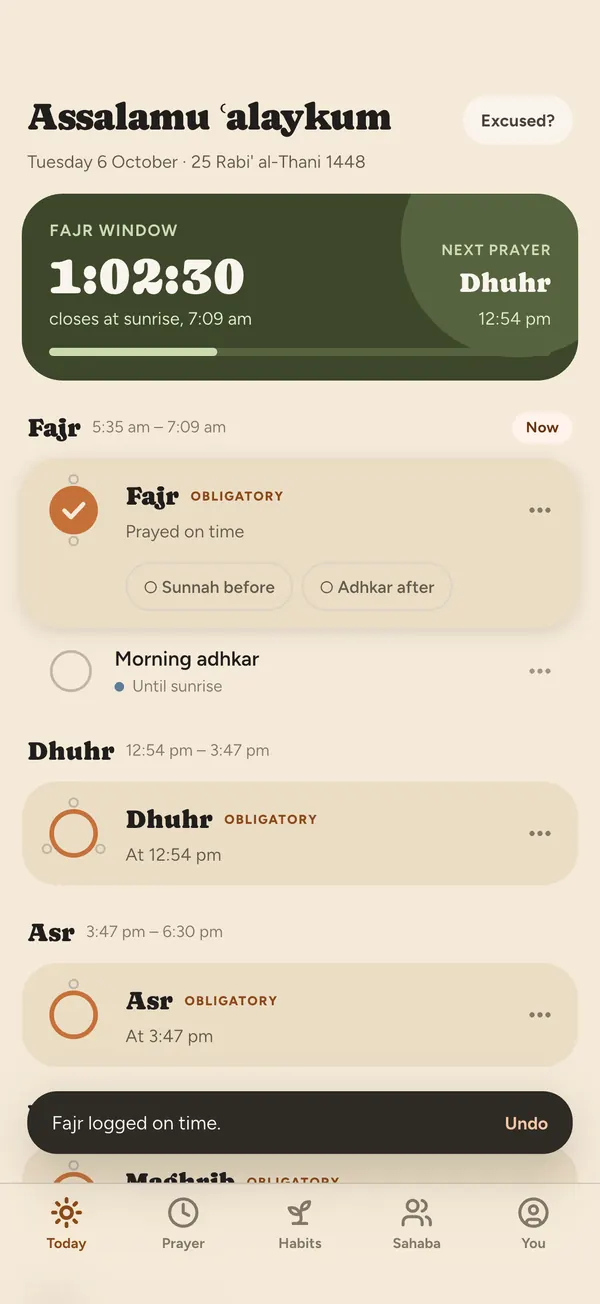
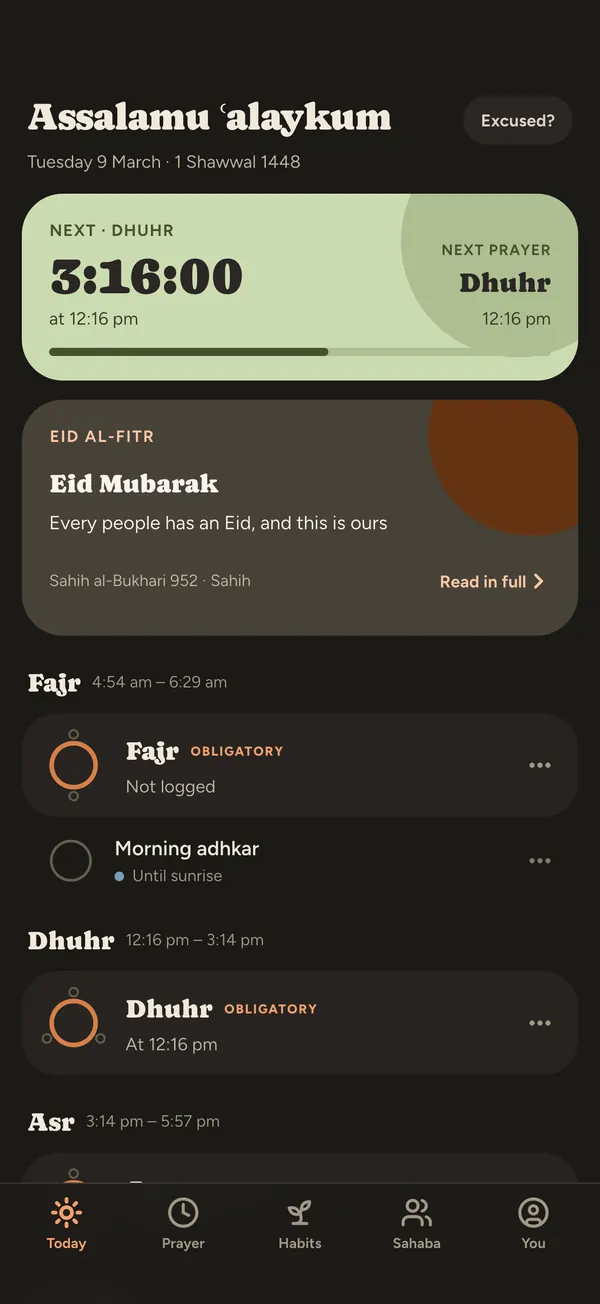
Prayer times and athan, without ads
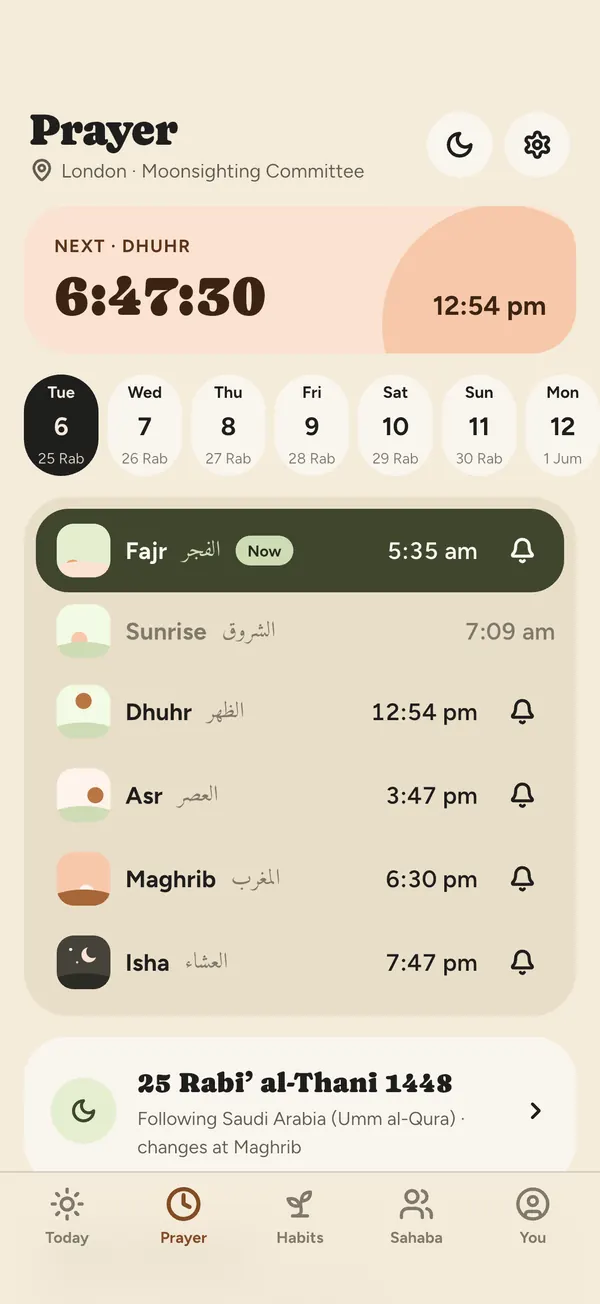
Aqdam calculates the five prayer times on your device with the open-source adhan library. Choose the method your masjid uses (there are nine, plus custom angles), standard or Hanafi Asr, and per-prayer minute adjustments.
At each prayer you can hear the athan, in one of five voices, for the prayers you choose, with an optional reminder a few minutes before. Prayer reminders can be allowed as Time Sensitive so a Focus mode doesn't hide them.
Allow location so times follow you, or search for a city instead. Location is used on your device and never sent to us. Check your times against your local masjid.
The five prayers first, then small habits
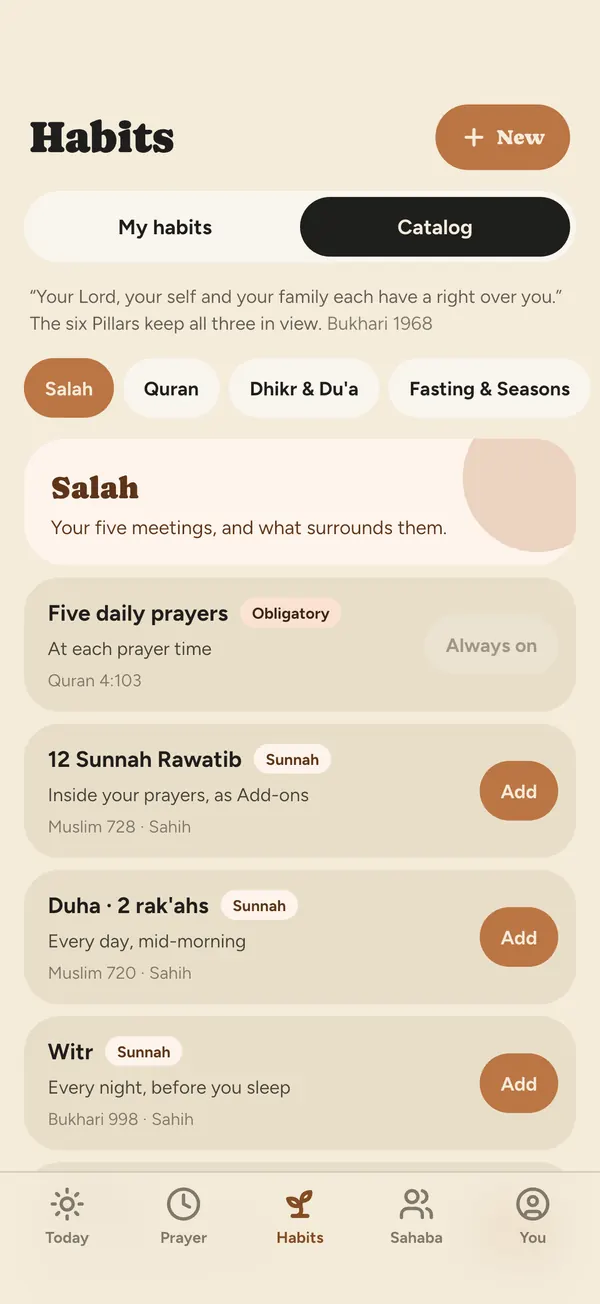
The five daily prayers are tracked as habits. On top of them, add the voluntary practices you can keep: sunnah prayers, Duha, Witr, the morning adhkar, a daily Quran portion. Each habit in the catalog shows the verse or hadith it rests on, and its grade.
Consistency is forgiving: there is no streak to lose, and a missed day doesn't wipe out what you've built.
Qada Balance: keep count of missed prayers and fasts
When you log an obligatory prayer as missed, Aqdam offers to add it to your Qada Balance. When you make one up, mark it, with Undo if you tap by mistake. A prayer you didn't log is never counted.
Missed prayers or fasts from before Aqdam? On the Prayer tab, tap + next to a prayer in Qada Balance to add one. Missed Ramadan fasts have their own count, and Witr has one if you follow the Hanafi school.
The balance reads simply: “12 left · you've made up 8 this month”. No red, and no talk of debt.
Aqdam records; it doesn't rule. Rulings differ between schools, so ask a scholar you trust about your own situation.
Qada Balance
12 left · you've made up 8 this month
- Fajr4 left
- Dhuhr2 left
- Asr2 left
- Maghrib1 left
- Isha2 left
- Ramadan fasts1 left
“Whoever forgets a prayer, let him pray it when he remembers.” Bukhari 597 (opens in a new tab)
Excused Days: rest without breaking your consistency
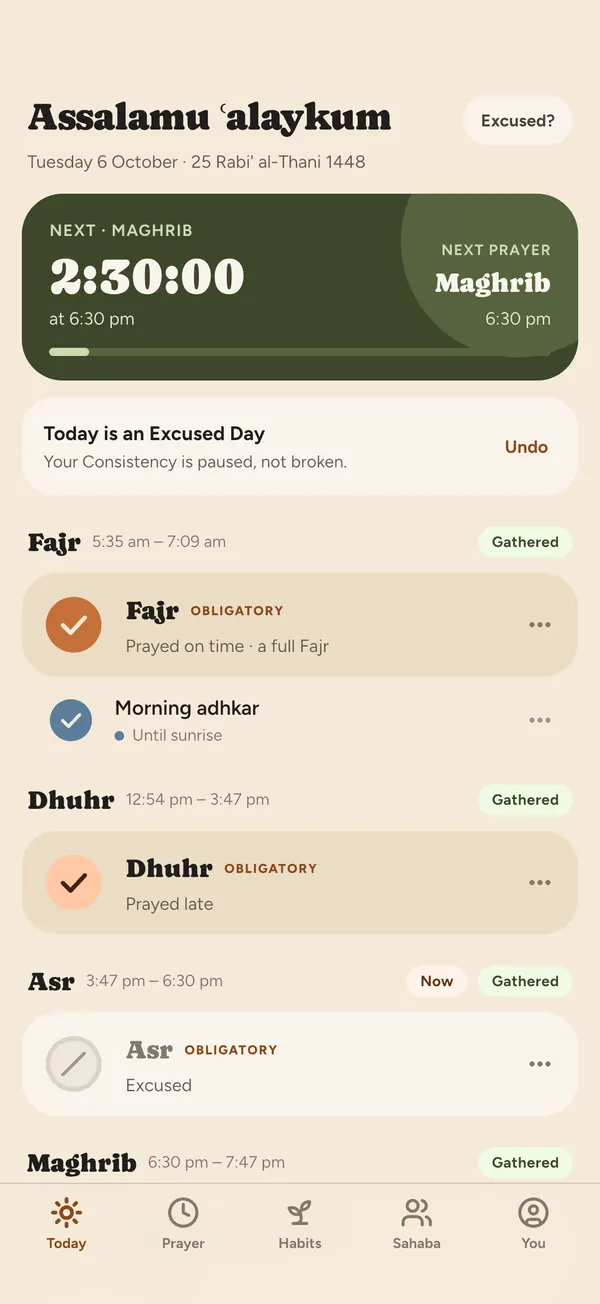
On a day you're excused from some acts of worship, mark it as an Excused Day. Your consistency is paused, not broken.
The reason is yours: outside the sheet where you choose it, Aqdam only ever shows “Excused”, on Today, in widgets and in notifications alike. An Excused Day covers one day unless you choose longer.
If an excused day means a Ramadan fast to make up, it can go into your Qada Balance.
Aqdam records; it doesn't rule. Rulings differ between schools, so ask a scholar you trust about your own situation.
An offline Quran reader
Read the whole Quran offline: the Arabic text from Tanzil, set in Amiri Quran, with Marmaduke Pickthall's English translation verse by verse, or the Arabic alone in Mushaf view.
Keep your place, copy or share an ayah with its translation, and make a daily Quran portion one of your habits.
بِسْمِ ٱللَّهِ ٱلرَّحْمَٰنِ ٱلرَّحِيمِ
“In the name of Allah, the Beneficent, the Merciful”
More than 170 du'as, each with its source
The well-known du'as come first, then the rest by occasion, from morning and evening to travel and grief. Each is in Arabic with an English translation, and shows the verse or hadith it comes from, and its grade.
Search in English or Arabic, save the ones you return to, and track a du'a as a habit. It works fully offline.
The same library is on this site, page by page: forgiveness, illness and visiting the sick, protection, provision and debt, parents, spouse and children, Ramadan, everyday dhikr and the Rabbana du'as from the Quran.
In the app and on this site
The Du'a Library
- الْحَمْدُ لِلَّهِ الَّذِي أَحْيَانَا بَعْدَ مَا أَمَاتَنَاOn waking upWaking and sleeping · Sahih al-Bukhari 6312
- أَمْسَيْنَا وَأَمْسَى الْمُلْكُ لِلَّهِThe dominion belongs to AllahMorning and evening · Sahih Muslim 2723
- رَبَّنَآ ءَاتِنَا فِى ٱلدُّنْيَا حَسَنَةً وَفِى ٱلْـَٔاخِرَةِ حَسَنَةًGood in this world and the HereafterQuranic du'as · Quran 2:201
Walk a Companion's path
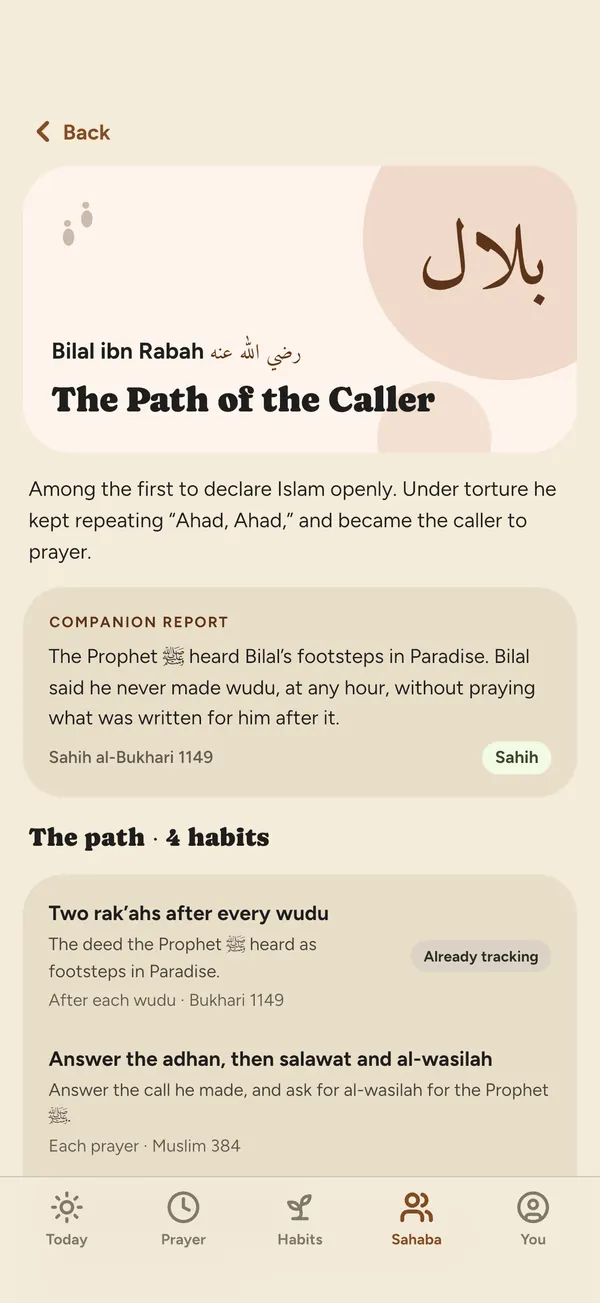
Companion Paths gather small practices from the lives of the Sahaba, each with its source. Choose the practices that fit your life, keep them, and change them later.
Meet the Sahaba on this site, or read their practices by theme.
Season Modes for Ramadan, Dhul Hijjah, Eid and Ashura
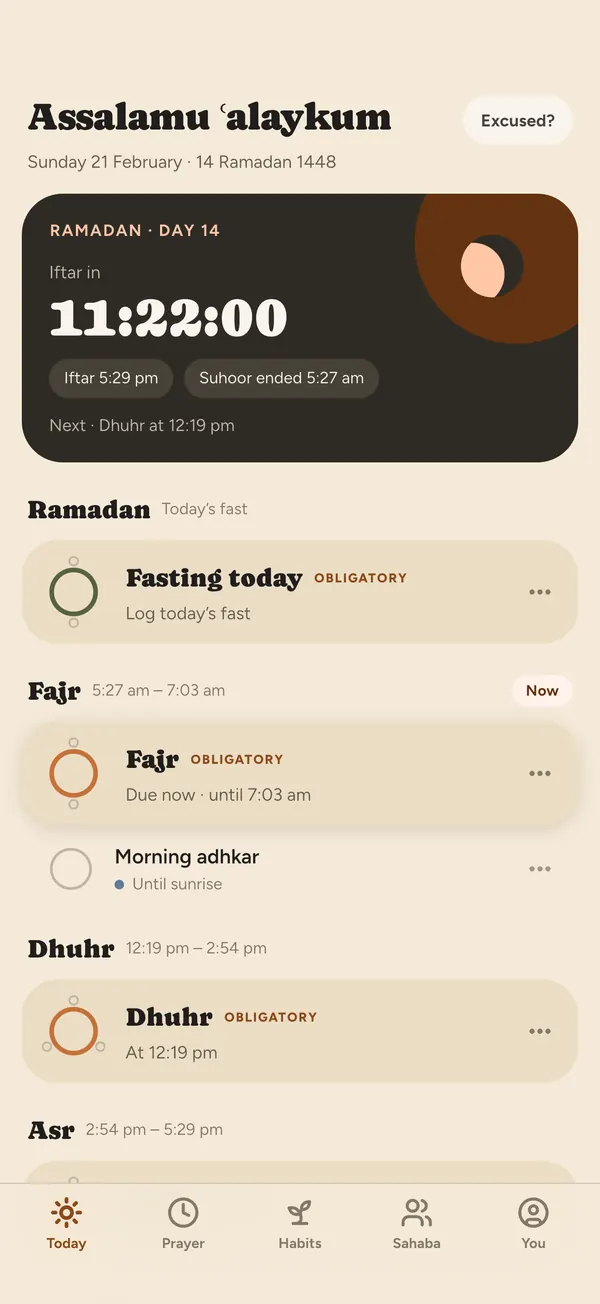
When a season begins, Today changes with it. In Ramadan: the fast as an obligatory habit, suhoor and iftar countdowns, Taraweeh, and a daily Quran portion. Then the last ten nights, Eid, the first ten days of Dhul Hijjah, Arafah and Ashura.
Seasons follow the Hijri calendar, which changes at Maghrib. Aqdam uses Umm al-Qura and lets you adjust the date by a day or two to match your community's moon sighting.
Home Screen and Lock Screen widgets
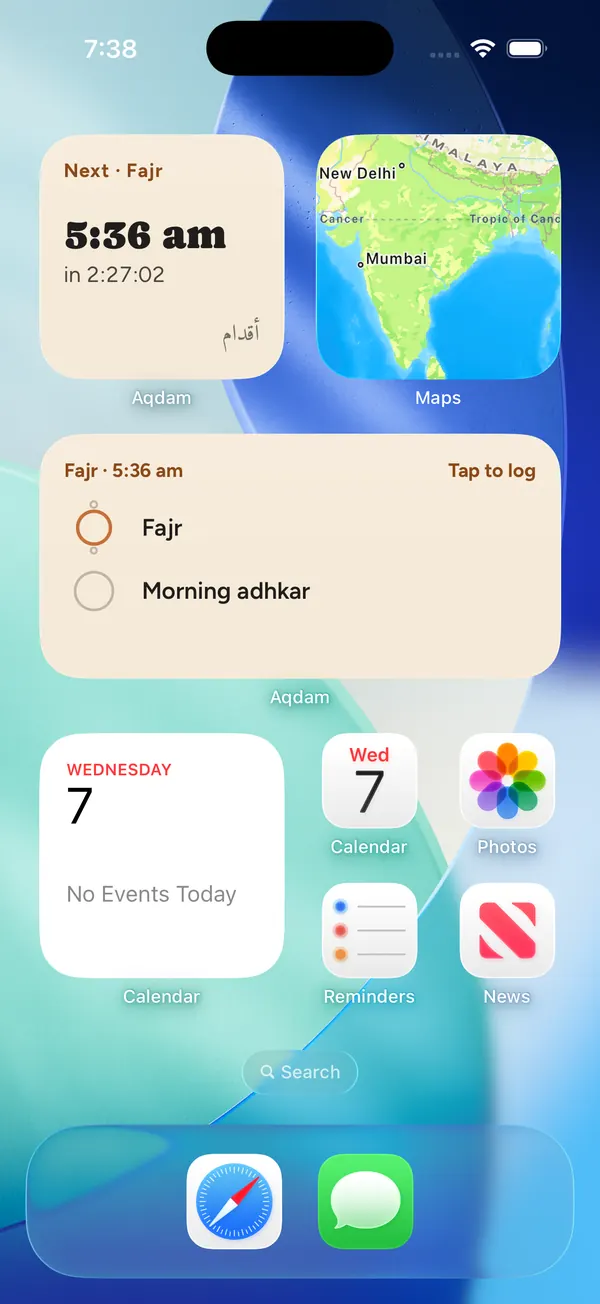
See the next prayer at a glance on your Home Screen or Lock Screen, keep today's prayers and habits on a medium widget and log them with a tap, or watch your consistency in a small Lock Screen ring.
No ads. No account. No analytics.
Your worship stays on your device. Aqdam has no server for your data, so your habits, prayer logs, Excused Days and Qada Balance are never sent to us or to anyone else.
The only record that leaves your device is that of an Aqdam Plus purchase, kept by our payments provider under a random, anonymous ID. Export your data whenever you like, or delete it all from You → Reset app.
Why Aqdam has no ads, and how to check any app · Privacy Policy
- No adsNone, anywhere in the app.
- No accountNo sign-up and no login.
- No analyticsNo analytics, crash-reporting or tracking software.
- On your deviceLogs, Excused Days and Qada Balance stay in a database on your device.
Questions
Does Aqdam have ads?
No. There are no ads in Aqdam, and no advertising or analytics software in the app.
Do I need an account?
No. There is no account and no login. Your habits, logs, Qada Balance and settings stay on your device. A purchase is tied to your Apple ID or Google Play account, not to an Aqdam account.
Does it work offline?
Yes. Prayer times are calculated on your device, and the Quran reader and the Du'a Library are bundled with the app.
Which calculation methods does it support?
Nine calculation methods plus custom angles, standard or Hanafi Asr, and per-prayer minute adjustments, so you can match your local masjid. Find them in Prayer → Settings.
Does a missed day reset my progress?
No. Aqdam uses forgiving consistency instead of streaks: a missed day doesn't wipe out what you've built, and an Excused Day pauses your consistency without breaking it.
Is it a subscription?
Aqdam is free to download. Aqdam Plus, which unlocks everything, is a yearly subscription that starts with a 7-day trial and renews each year until you cancel. If you bought Plus once before, you keep it for good. See the terms.
Does it work on iPad?
Yes. Aqdam runs on iPhone and iPad, and on Android phones and tablets.
Is there an Android version?
Yes. Aqdam is on Google Play for Android phones and tablets (Android 8.0 or later). More about Aqdam for Android.
More answers on the support page.